2007年VOA标准英语-US Investigator Says Iraqis Steadily Taking Ove
搜索关注在线英语听力室公众号:tingroom,领取免费英语资料大礼包。
(单词翻译)
By Gary ThomasWashington
28 February 2007
Last month the U.S. Special Inspector-General for Iraq Reconstruction1 issued a blistering2 report on waste and abuse in U.S.-funded reconstruction programs in Iraq. Speaking to VOA, Stuart Bowen now says improved mechanisms3 are in place to monitor how money is being spent as the burden for reconstruction shifts from the United States to the Iraqi government. VOA Correspondent Gary Thomas talked to the investigator4.
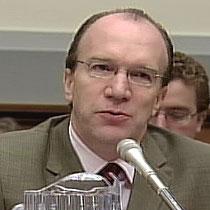 |
| Stuart Bowen (Jan 2007 photo) |
"The theme, and why this theme is such an important watershed5 moment, is that it marks the end of the phase wherein the United States will bear the preponderant financial burden for the relief and reconstruction of Iraq," said Stuart Bowen. "That burden has now in earnest shifted to the Iraqis and the Iraqi government."
Congress created a $21-billion Iraq Reconstruction Fund in 2003, but those funds have all been used. Bowen says the United States will continue to have a financial role to play in Iraq, but it will be along more traditional lines.
"It signals the evolution, the beginning of the evolution, of the U.S. role in Iraq to a support role, and it will continue to evolve into a traditional relief and support role," he said. "But I call the current phase 'foreign aid plus-plus,' which means there is still a significant and continuing role for the United States to play in financially and otherwise supporting Iraq."
At the end of January, Bowen's office issued a report that outlined cases of corruption6 and waste in reconstruction programs, including among some U.S. contractors7. Some cases are under examination by the U.S. Justice Department for possible criminal charges.
Secretary of State Condoleezza Rice came under grueling examination Tuesday from senators on the Appropriations8 Committee about wasteful9 spending in Iraq. Rice admitted there had been what she termed problems with some contractors, but denied there has been widespread abuse of U.S. reconstruction funds.
"In terms of the funding that was provided by the Congress under the Iraqi Reconstruction Fund, I think that there have been some problems with some particular contracts; a particular contract, for instance, for health clinics and health services," said Condoleezza Rice. "But I do not believe that there has been a claim of widespread - of abuse of the funding that was provided under the IRF [Iraq Reconstruction Fund]."
Bowen said he found in this, his 15th trip to Iraq, that new both U.S. and Iraqi mechanisms are in place to try bring corruption under control and transparency to contracting.
Bowen adds that, under Congressional mandate10, his office will soon begin a detailed11, year-long audit12 of all reconstruction programs.
"A forensic13 audit is really a stem to stern review of the capital investment in Iraq, namely, the Iraq Relief and Reconstruction Fund," he said. "That will answer a lot of the questions that many have about what was wasted and what worked."
The Inspector-General report also said the security situation has greatly hampered14 reconstruction efforts, especially in Baghdad, and caused some reconstruction funds to be redirected to security issues. Electricity in the capital, for example, remained at pre-war levels in the last quarter of the year.
Bowen says power facilities are under constant attack, and crews who might repair them are in great danger.
"Infrastructure15 security is a problem," noted16 Stuart Bowen. "The Baghdad ring, as it is called, the electric lines and towers that provide electricity to the capital city, has been subject over the last nine to 12 months to incessant17 attacks."
The Bush Administration has asked for an additional $1.2 billion for reconstruction and expects the international community to step into the financial breach18. But Bowen said the response has been disappointing, with $13 billion in reconstruction aid pledged by donor19 countries, but only $3 billion received.


