2007年VOA标准英语-Rwandans Say Reconciliation Achieved by Forgivi
搜索关注在线英语听力室公众号:tingroom,领取免费英语资料大礼包。
(单词翻译)
By Noel KingGwesero, Rwanda
11 September 2007
Rwanda's 1994 genocide shook the world with images of brutality2, as ethnic3 tensions in the central African nation flared4 into a frenzy5 of violence. In a little over three months, an estimated 800,000 ethnic Tutsis and moderate Hutus were murdered. The aggressors were Hutu militias6 known as interahamwe, as well as many ordinary Rwandans, including women and children. Thirteen years later, Rwandans say there is only one way to move past the horrors of genocide: forgiveness. For VOA, Noel King has this report from Gwesero, Rwanda.
Members of the Nshuti social club are on their way out for an afternoon excursion to Gwesero Lake, north of the Rwandan capital, Kigali.
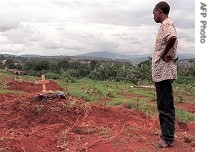
Man at the "genocide cemetary" of Kigali, Rwanda (file photo)
Club members gather weekly to play sports and work on small development projects around Rwanda. Packed into a cramped7 bus, they are merry and excited about the trip.
But the group grows silent as the bus approaches a reminder8 of Rwanda's troubled history. A sign by the lake notes that Gwesero is the only place in Rwanda where no one was killed during the genocide.
Club President Mustafa Uwihorewe reflected on changes in recent years. "In the past years, the government taught us to hate one another, to kill one another," he said. "Nowadays, they're trying to educate us. We're one people. We were fighting for nothing," he said.
The group has both Hutu and Tutsi members, though, like most Rwandans, none of the members identify themselves by ethnicity anymore.
Some members call themselves survivors10 of the genocide. Some prefer not to talk about it. Almost none will discuss specific memories of April 1994.
Outside of Rwanda, many people wonder how it is possible for Rwandans to forgive one another for the brutal1 bloodshed that took place.
It seems forgiveness is possible by placing blame not on individuals, but on Rwanda's former government.
Rwandans overwhelmingly pin responsibility for the genocide on the previous Hutu-dominated administration, which incited11 ethnic tensions between Hutus and Tutsis.
Ambassador Richard Sezibera, Rwanda's special advisor12 to the Great Lakes Region, he credits a regime change for the progress. "Rwandans have rehabilitated13 and reconstructed their country. They're involved in a process of national reconciliation14. I think the key has been leadership; people-centered, people-conscious leadership that is determined15 to learn from history but not be tied down by that history," he said.
While many Rwandans say education and dialogue are the best ways to move forward, many more promote intermarriage.
While Hutus and Tutsis always intermarried in Rwanda, now the practice is actively16 promoted - and increasingly popular.
Of course, no steps could be taken without forgiveness. "We have no choice but to forgive one another. We have no choice but to forgive if we want to live together peacefully," said Josephine Uzayisengo, a member of the Nshuti club and a genocide survivor9.
Though Rwandans don't like to be known as a nation of tragedy, they say no good will come of forgetting what happened here.
Consolee Katsenjerwa, another genocide survivor, lost most of her family in 1994. She says her personal motto is a phrase that has great meaning for many here. "We have to forgive but we can't forget," she said.
The Nshuti group will meet again next week. And while they identify themselves simply as a group of friends with a social conscience who like to play sports together, they are also living proof of the progress forged by forgiveness.
 收听单词发音


